Locate the work
Use the progression ladder to discuss where one workflow stands today.
Open progression ladder ↗Free frameworks, worksheets, and examples to help you make the next useful move. Open, download, and use them. No email required.
Use the progression ladder to discuss where one workflow stands today.
Open progression ladder ↗Define the problem, product, people, production, and proof.
Use the Five Decisions worksheet ↗Choose a baseline, a useful outcome, and the costs to account for.
Use the value and cost worksheet ↗Locate the work before choosing the next capability to build.
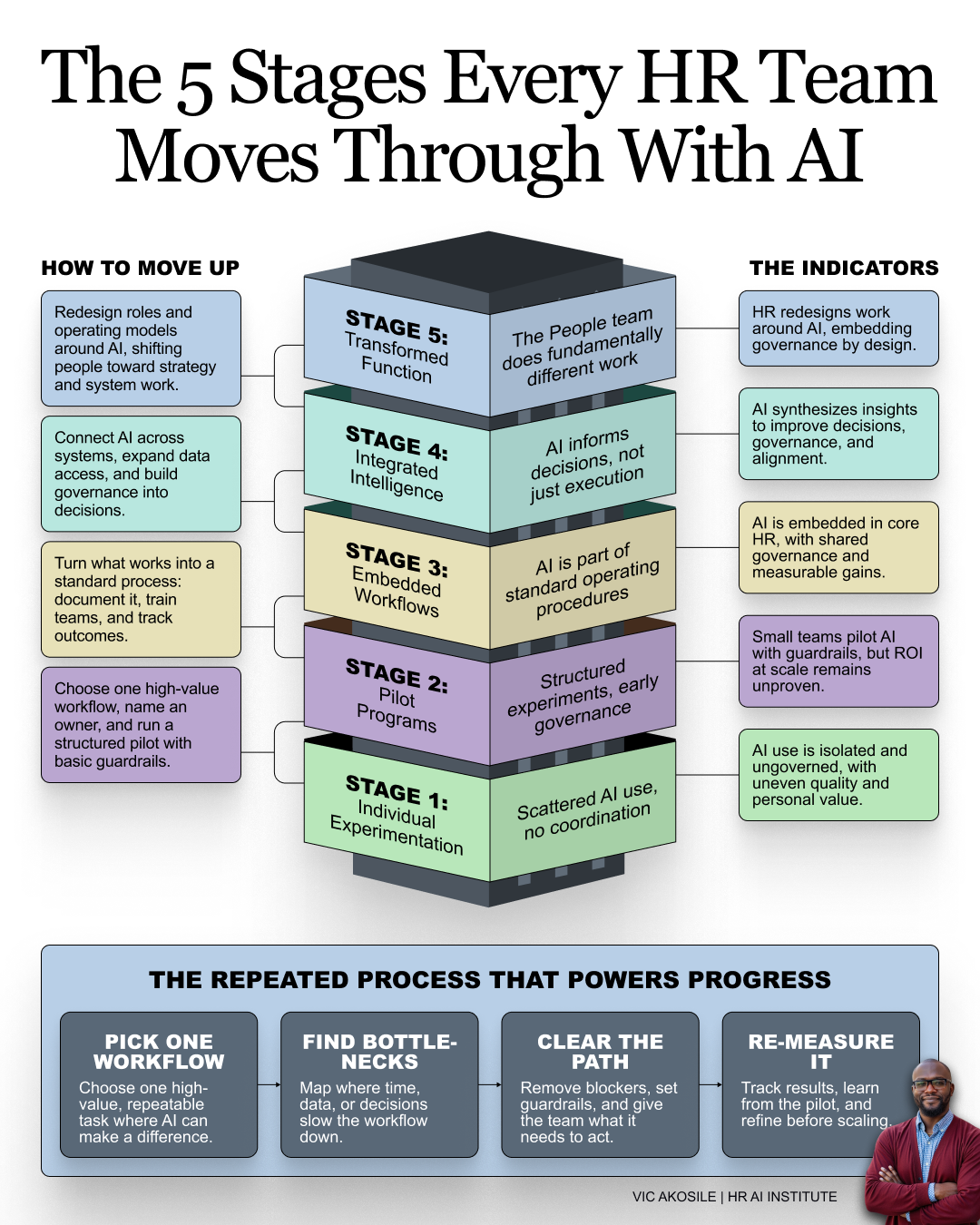
Five stages to locate the work and identify the next capability to build.
Explore examples, map one workflow, and compare opportunities using evidence.
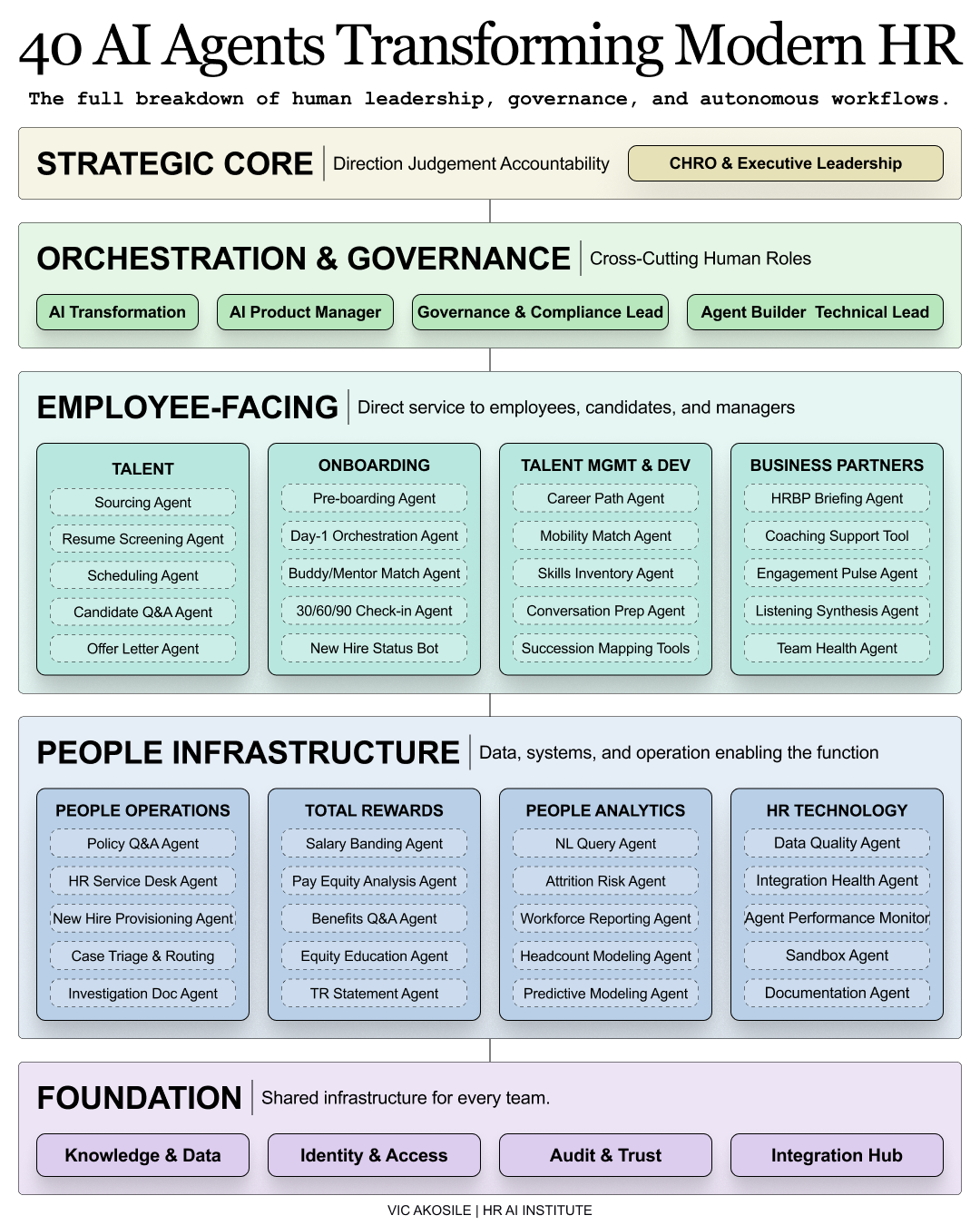
A map of 40 potential agents across HR. Use it to start a conversation about your own workflows.
A team discussion template: stage, evidence, next step, owner, and review date.
24 examples across HR, revenue, operations, and personal work, labeled by type and function.
Map the work before deciding where AI belongs.
Compare opportunities using explicit evidence and a discussion rubric.
Define the product, delivery route, responsibilities, and boundaries.
An end-to-end playbook for a Google Chat assistant backed by BigQuery. Walk through mock data, metric definitions, access controls, deployment, and testing, with explained code examples.
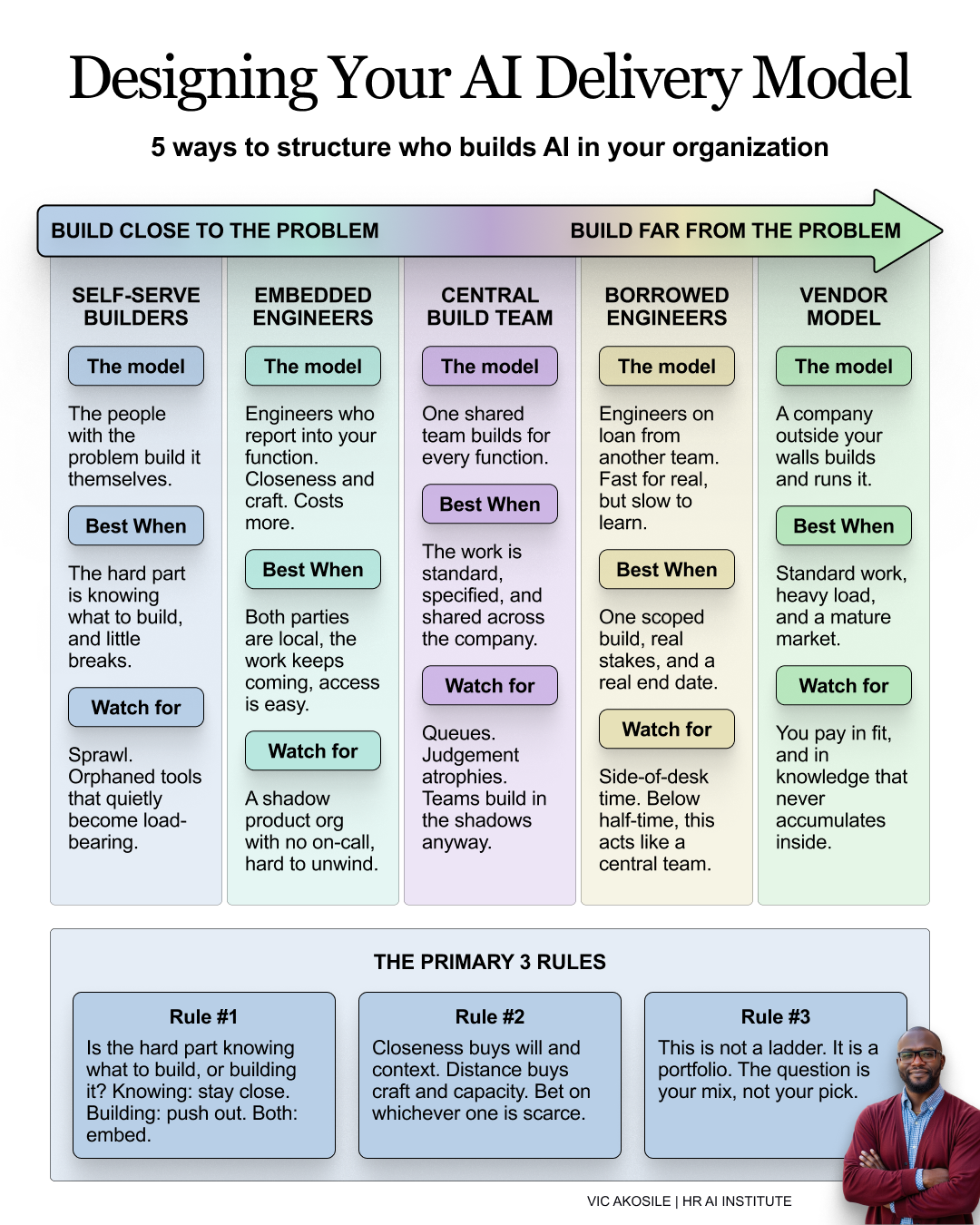
Compare self-serve builders, embedded engineers, a central team, borrowed engineers, and vendors.
Define Problem, Product, People, Production, and Proof for one workflow.
Choose between DIY, Rent, Borrow, and Embed for a specific workflow.
Turn an opportunity into a small product with a user, owner, and proof plan.
Make task boundaries, approval, and escalation explicit.
Set a baseline, test results, and plan for ownership after launch.
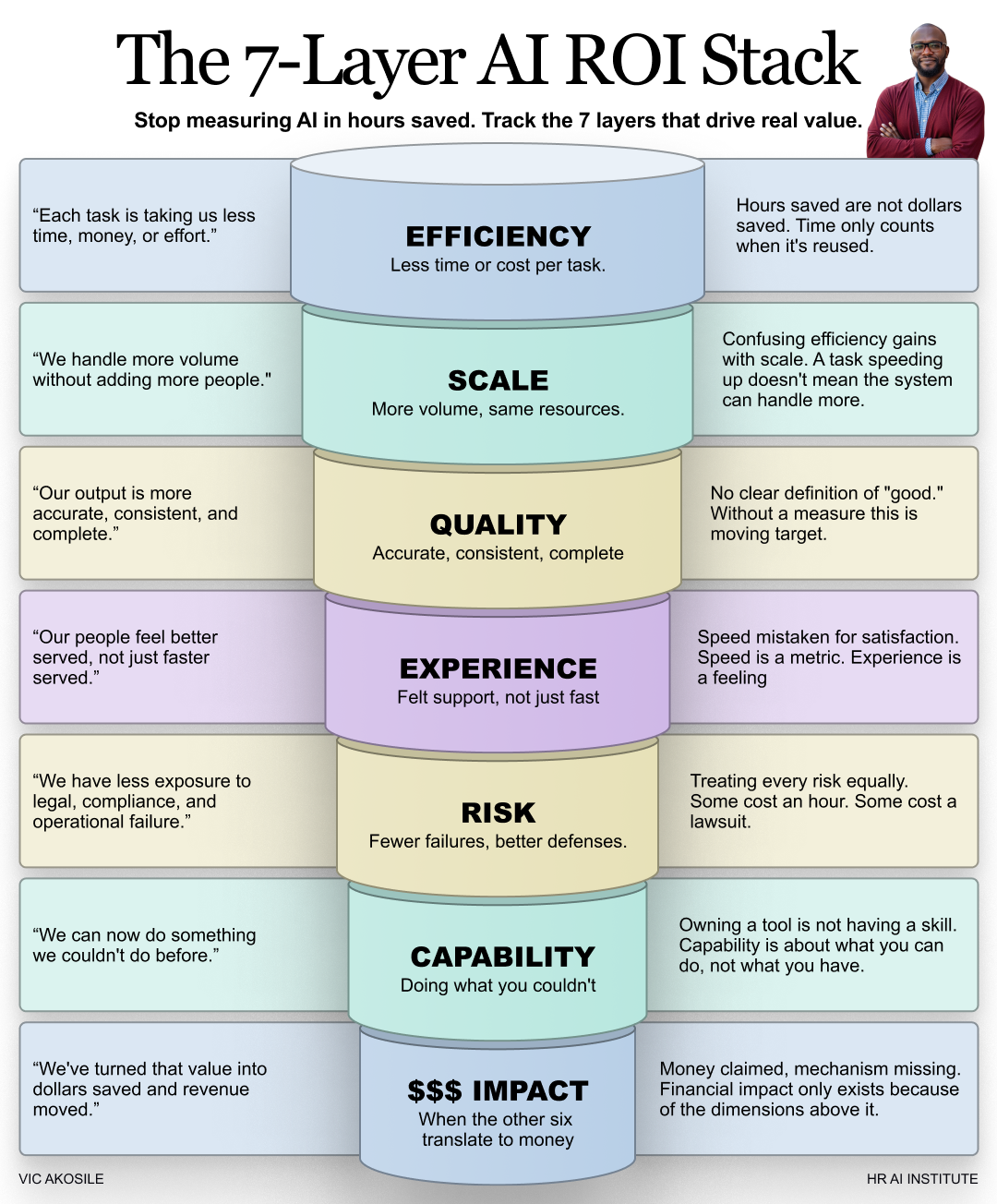
Look beyond time saved. Map efficiency, scale, quality, experience, risk, capability, and financial impact.
Select value measures, set a baseline, and account for delivery and operating costs.
Test usefulness, accuracy, exceptions, and human effort before expanding a pilot.
Check the evidence needed to keep a workflow useful after launch.
Turn a decision into owned actions, evidence, and review points.
Keep supporting and disconfirming evidence attached to a decision.
Choose a useful contribution and demonstrate it through a small project.
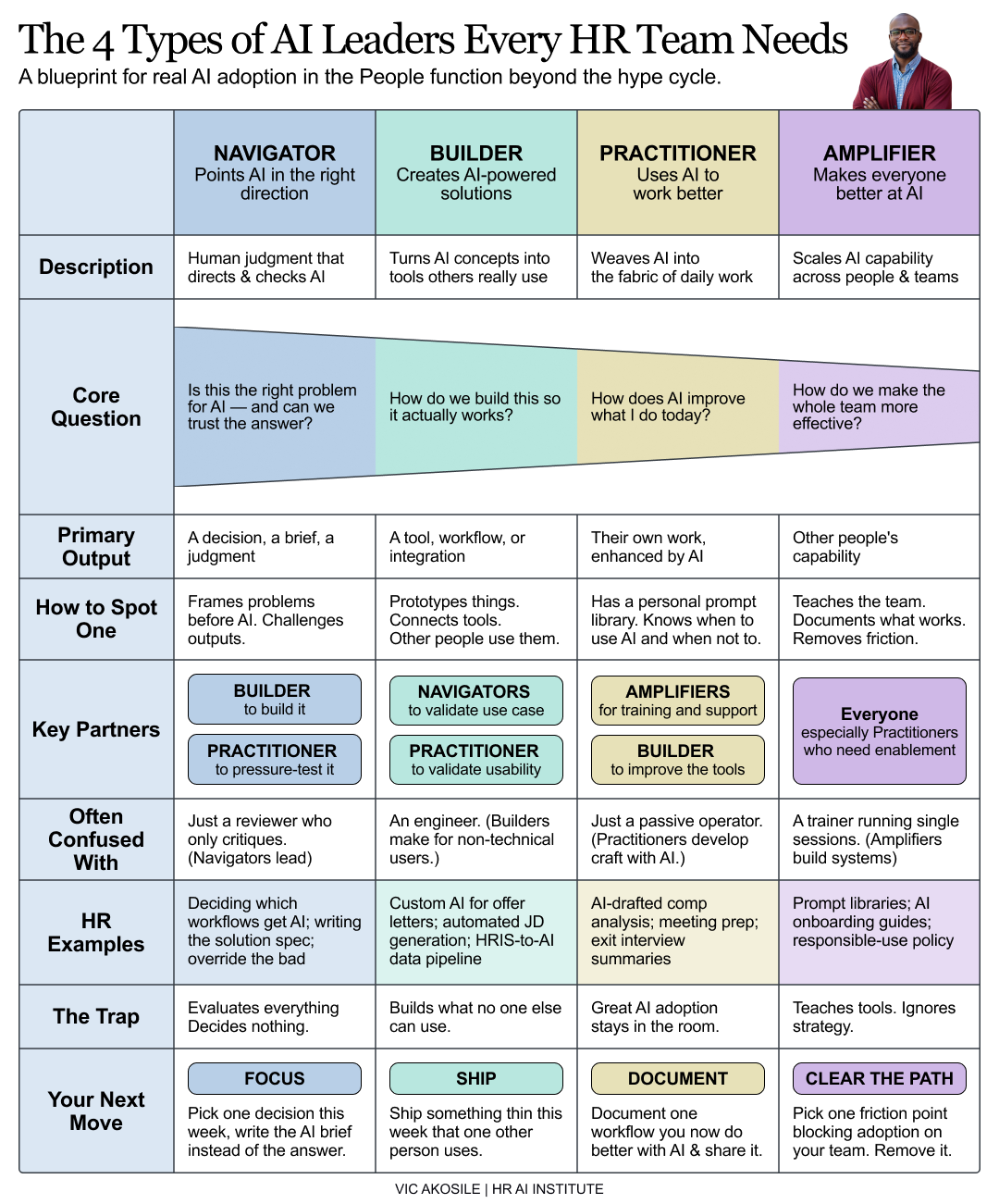
Navigator, Builder, Practitioner, and Amplifier: complementary roles every team needs.
Connect your experience to a direction and a small project. Includes a self-contained assistant prompt.
Three fictional examples show the decisions, assumptions, and evidence behind the work.
Follow one fictional workflow from opportunity to a pilot and operating decision.
Use the tools to improve a handoff across sales and delivery.
Turn domain experience into a direction and a two-week learning project.
Open the live presentations or download the original session toolkits.
A product mindset for People Analytics: spot product opportunities, make useful and trustworthy tradeoffs, and identify where you can lead. Includes the Project Blue case study.
Vic’s WashingtonExec presentation, including the use-case appendix.
Vic’s SIOP Leading Edge Consortium presentation on delivering internal products.
PDFs are printable. Editable templates are Markdown text files you can open in a text editor or copy into your preferred document tool. CSV scorecards open in a spreadsheet application; use the blank row for your work and treat example rows as illustrations.
Use and adapt these tools for your own work or your team’s work. When sharing an adaptation, credit Built Into Work / Vic Akosile and link to the original. Third-party platforms and linked presentations retain their own terms.